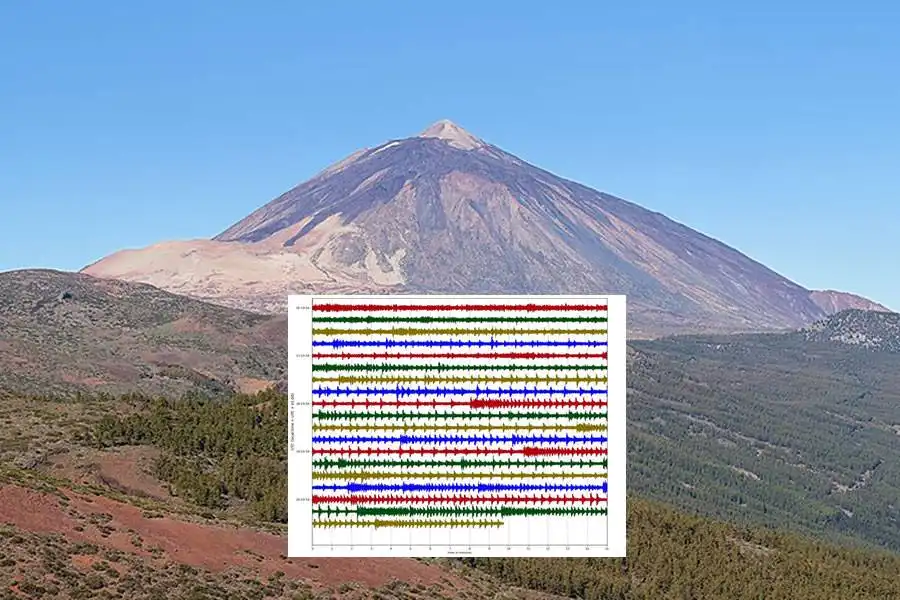
The Volcanological Institute of the Canary Islands (Involcan) has urged the public to remain calm after a new swarm of small earthquakes was detected beneath Tenerife, stressing that there is no increased risk of a volcanic eruption in the short or medium term.
According to Involcan, the Canary Islands Seismic Network recorded the latest episode between 6:35pm and around 11:00pm yesterday, Friday 3rd July, identifying it as the 14th seismic swarm of this type beneath Tenerife since October 2016.
Scientists say the latest swarm displays characteristics that are very similar to previous episodes observed over the past decade.
Linked to Hydrothermal Activity
Involcan explained that the most likely cause of the seismic activity is the injection of magmatic hydrothermal gases into the island's hydrothermal system, rather than the movement of magma towards the surface.
The institute described this as a recurring geological process that has been taking place since 2016 and is supported by several geophysical and geochemical observations.
These include increased diffuse emissions of carbon dioxide (CO₂) around the summit crater of Mount Teide, along with slight ground deformation detected on the volcano's north-eastern flank.
No Change in Eruption Risk
Despite the renewed seismic activity, Involcan emphasised that there is currently no evidence to suggest an increased likelihood of an eruption.
The institute sought to reassure the public, stating that the latest swarm does not alter the volcanic hazard level for Tenerife in either the short or medium term, which means there is currently no evidence that an eruption is becoming likely in the coming weeks or months
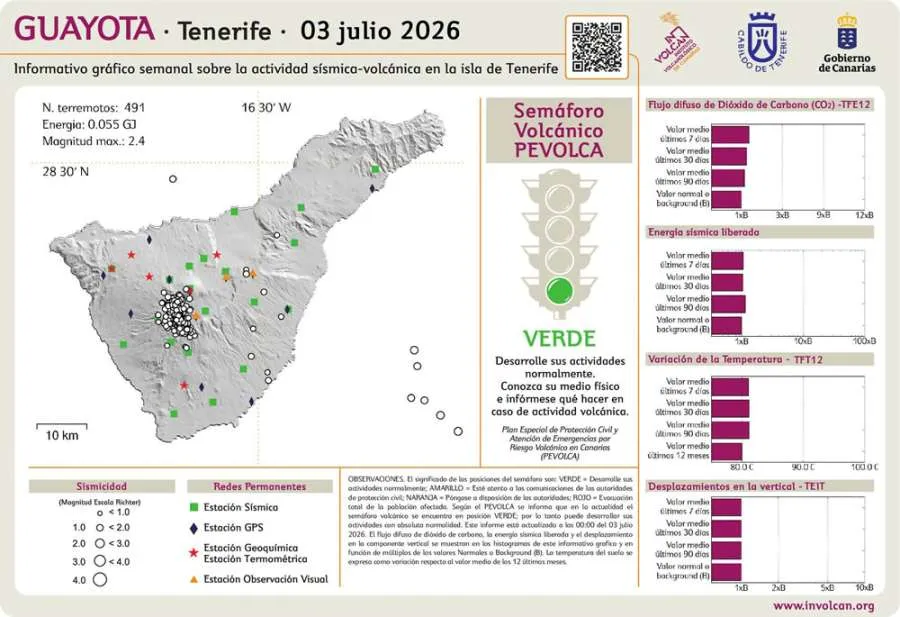
Latest infomap from Involcan showing seismic activity and current risk level (03.07.2026)
However, researchers noted that the episode is another reminder that the geological process responsible for the increase in what scientists describe as "volcanic noise" beneath Tenerife has remained active since late 2016 and, so far, shows no signs of coming to an end.
While the activity continues to be closely monitored, volcanologists stress that such seismic swarms are not unusual in volcanic regions and do not necessarily indicate that an eruption is imminent.
Why they avoid saying "long term"
Volcanologists cannot reliably forecast years in advance. Tenerife is an active volcanic island and another eruption will occur at some point in geological time, but it could be decades, centuries, or longer. Therefore, statements are usually limited to the periods for which monitoring data provides meaningful confidence.